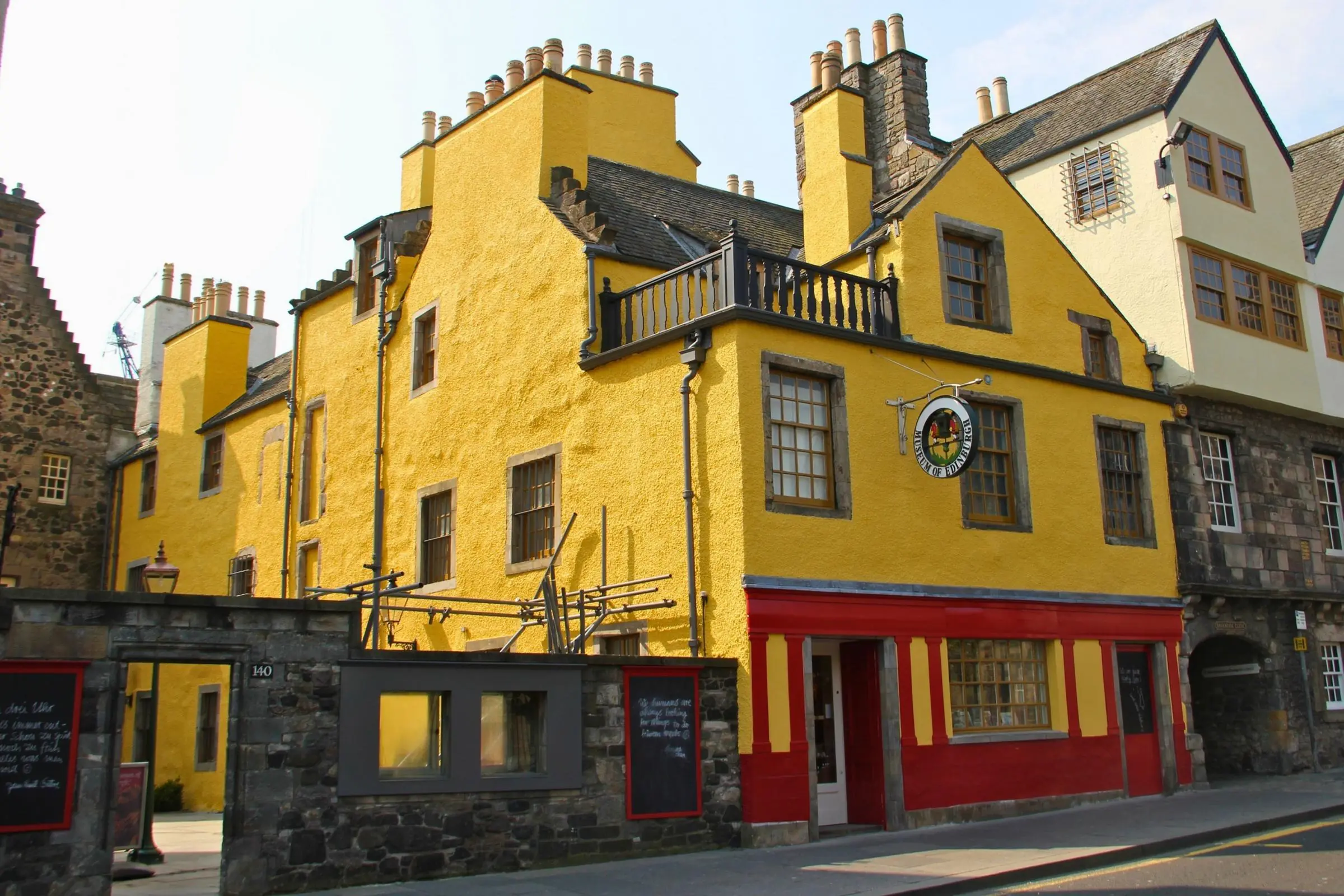
Walking down the lower half of the Royal Mile, away from the dense crowds of the castle and toward the Palace of Holyroodhouse, the architecture shifts. The buildings feel older, the street widens slightly, and suddenly, a bright, mustard-yellow building demands your attention.
This is Huntly House, home to the Museum of Edinburgh.
While the massive National Museum of Scotland handles the grand narrative of the entire country, the Museum of Edinburgh zooms in on the city itself. It is a civic museum dedicated to the people, the crafts, and the layout of the Scottish capital. Best of all, admission is completely free.
If you want to understand how Edinburgh evolved from a cramped, walled medieval fortress into the city you see today, this is where you start.
What to Expect Inside Huntly House
The building itself is the first exhibit. Huntly House isn’t a modern, purpose-built gallery; it is a frankenstein of three 16th-century townhouses knocked together.
Because of this, the museum is a literal maze. You will walk across slanted, creaky floorboards, duck under low timber beams, and navigate narrow stone spiral staircases. The layout can be slightly disorienting, but that is part of the charm. It gives you a tangible sense of what it felt like to live in the cramped quarters of the Old Town centuries ago.
Accessibility Note: Because Huntly House is a protected 16th-century building, accessibility is limited. There is a lift to the upper floors, but the uneven floors, narrow doorways, and small steps between adjoining rooms can make navigating with a wheelchair or a wide stroller challenging.
Deep Dive: 5 Cultural Gems to Find
The museum holds a vast collection of civic artifacts, but if you want to focus your visit, seek out these five specific highlights.
1. Greyfriars Bobby’s Collar and Bowl
For many visitors, this is the main event. Greyfriars Bobby is Edinburgh’s most famous dog—a Skye Terrier who reportedly spent 14 years guarding his owner’s grave in Greyfriars Kirkyard.
While the story has been romanticized (and debated by historians), the artifacts here are real. You can see Bobby’s actual leather collar and his feeding bowl. The collar is particularly significant: it features a brass plate proving he was a licensed dog, paid for by the Lord Provost of Edinburgh, Sir William Chambers, which saved Bobby from being rounded up by the city’s dog catchers.
Keep Exploring: If you want to hear the full, unvarnished story of the famous terrier, consider booking a Greyfriars Kirkyard Tour.
2. The Ancient City Plans
Edinburgh is famous for its stark divide between the chaotic, medieval Old Town and the orderly, Georgian New Town. The Museum of Edinburgh houses the original 1767 plans drawn up by James Craig for the New Town.
Looking at these hand-drawn maps, you can see the exact moment Edinburgh decided to break out of its defensive walls and build a rational, grid-based city. It is fascinating to trace the streets on the map and realize they perfectly match the layout of Princes Street and George Street today.
3. Scottish Silver Collections
Edinburgh was once a major European hub for silversmithing. The museum holds a glittering collection of locally crafted silver, ranging from ornate tea sets to ceremonial civic items.
Take a close look at the hallmarks stamped into the metal. These tiny symbols were a strict quality control system, identifying the maker, the purity of the silver, and the year it was made. It is a testament to the wealth that flowed through the city during the Scottish Enlightenment.
4. Local Glass Craftsmanship
Alongside silver, Edinburgh was renowned for its glassmaking, particularly Edinburgh Crystal. The museum displays intricately engraved glass pieces, from delicate wine goblets to massive, commemorative bowls. The craftsmanship highlights the industrial and artistic boom the city experienced in the 18th and 19th centuries, long before mass production took over.
5. The Original Historic Layout
As you move from room to room, pay attention to the architecture. You will notice sudden changes in floor height and wall thickness. This is because you are walking through the original walls of separate 16th-century houses.
Look out for the reconstructed historic interiors, including wood-paneled rooms that show how wealthy merchants would have decorated their homes right here on the Canongate.
How to Visit: Advice for Different Travelers
The Museum of Edinburgh is flexible, but how you approach it should depend on your travel style and constraints.
For the Time-Poor
If you only have 30 to 45 minutes, skip the deep dives into the pottery and glass collections. Head straight to the ground-floor courtyard to see the collection of historic stone fragments (including old shop signs and statues rescued from demolished buildings). Then, head up to the first floor to see Greyfriars Bobby’s collar and the New Town city plans before continuing along an Edinburgh Castle and Royal Mile guided walking tour.
For Families
Kids generally enjoy the creaky, maze-like nature of the building—it feels like exploring a secret hideout. The museum often has a free activity trail or a “handling table” where children can touch replica historical objects. Tip: Leave the stroller at your hotel if possible. The narrow stairs and tight corners make pushing a buggy highly frustrating. Use a baby carrier instead.
For Budget Travelers
This is one of the best free activities in the city. To make a full morning of it without spending a penny, spend an hour here, then cross the street to check out the historic Canongate Tolbooth and the People’s Story Museum (also free, though check ahead for seasonal openings), which focuses on the working-class history of Edinburgh. Afterward, walk up the road to explore the free areas of St Giles’ Cathedral.
Quick Visit Tips
Admission
- No advance booking required.
- Donations are encouraged at the door.
- Open daily in summer (typically closed Tuesdays and Wednesdays in winter); check the official Museums & Galleries Edinburgh site before visiting.
Logistics and Crowd Tips
Getting There: The museum is located at 142-146 Canongate, on the lower section of the Royal Mile.
- Walking: It is about a 15-minute walk downhill from Edinburgh Castle, or a 5-minute walk uphill from the Palace of Holyroodhouse.
- Bus: The Lothian Bus route 35 stops right outside.
Avoiding the Crowds: Because it sits on the quieter end of the Royal Mile, the Museum of Edinburgh rarely gets the shoulder-to-shoulder crowds seen at the Castle or the National Museum. However, during the August Fringe Festival or on rainy weekend afternoons, the small rooms can feel stuffy and congested. Local Tip: Visit right when it opens at 10:00 AM. You will likely have the creaky floorboards entirely to yourself for the first hour.
While the Museum of Edinburgh is free, nearby historical sites on the Royal Mile require advance booking, especially in summer. If you want to see the underground streets of the Old Town, book your tickets early.
Where to Stay Nearby
The Canongate area of the Royal Mile is an excellent place to base yourself. It is highly historic but slightly removed from the loudest late-night pub crowds closer to the castle. Use the map below to find accommodations within walking distance of Huntly House.
Make a Day of It: Nearby Attractions
The lower Royal Mile is packed with history. Once you finish at the Museum of Edinburgh, you are within a five-minute walk of several other major sites:
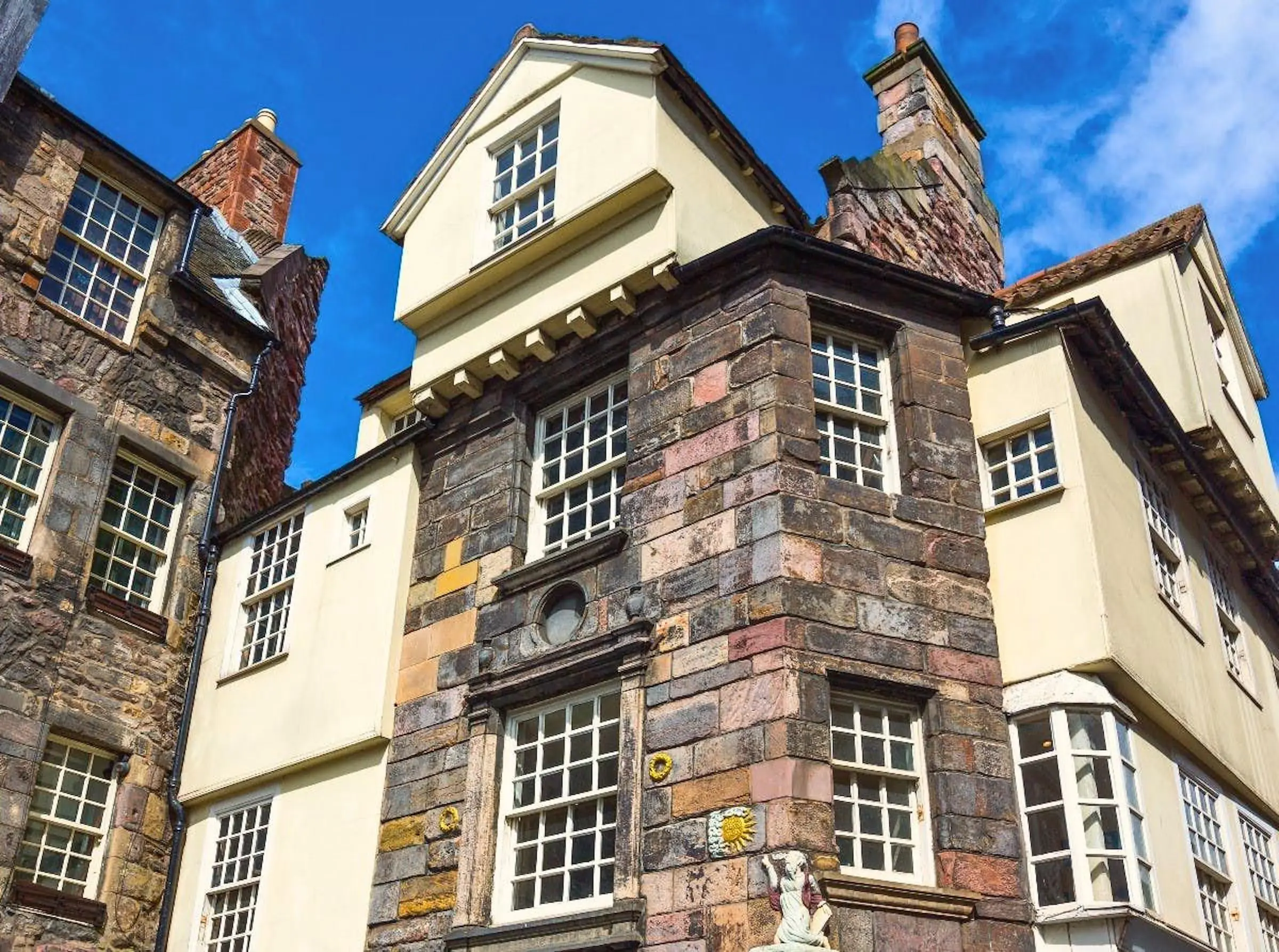
John Knox House
Step inside one of the oldest surviving medieval buildings on the Royal Mile.
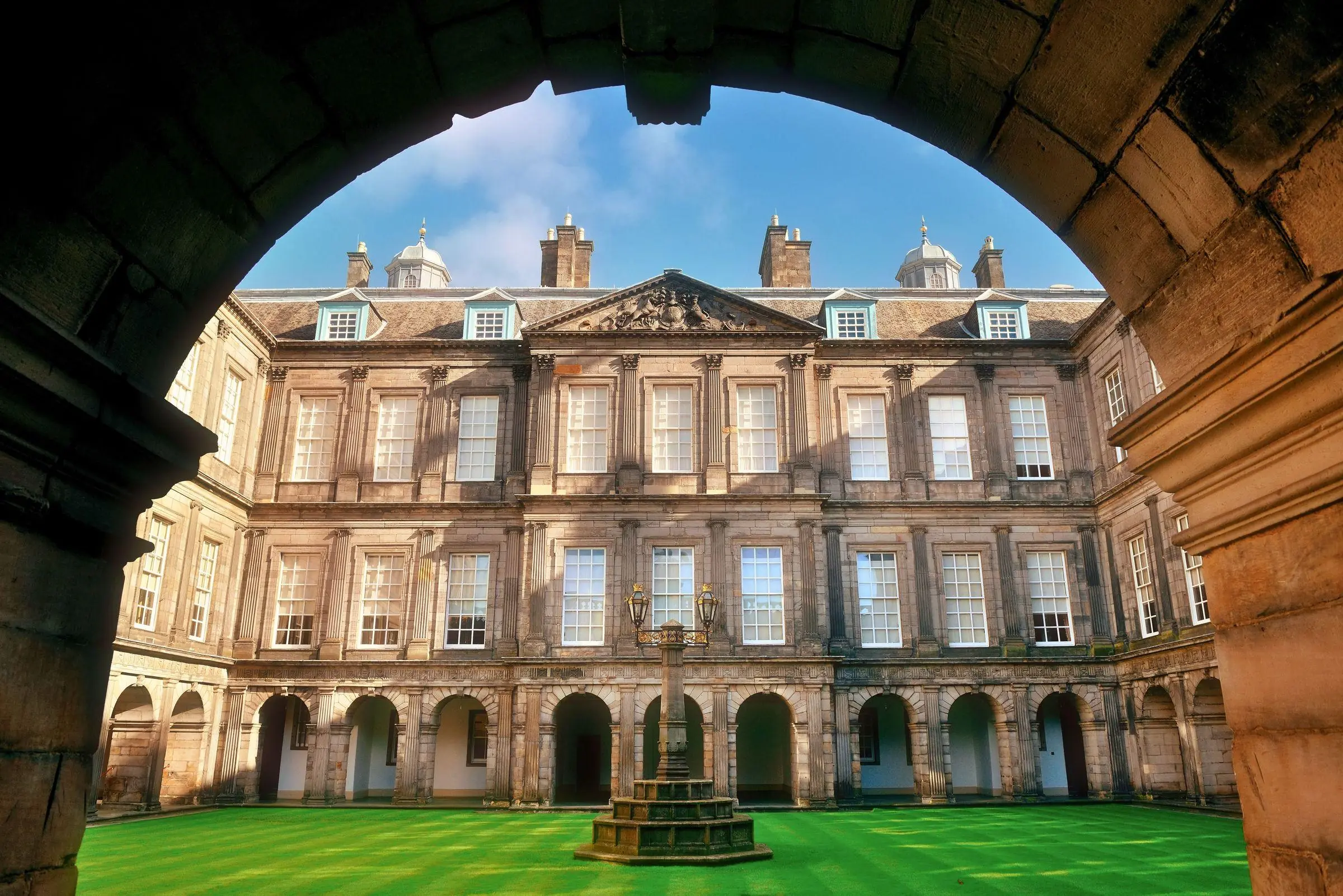
Palace of Holyroodhouse
Explore the official Scottish residence of the British monarch, from the dramatic chambers of Mary, Queen of Scots, to the ruined nave of Holyrood Abbey.
If you want to dive deeper into the city’s history with a local expert, joining an Old Town History Walking Tour or comparing historical walking tours of Edinburgh is highly recommended. Guides often stop outside Huntly House to explain its unique facade before leading you through the surrounding closes (alleyways).
Frequently Asked Questions
Is the Museum of Edinburgh the same as the National Museum of Scotland?
No. The National Museum of Scotland is a massive, multi-story building on Chambers Street covering global natural history, science, and Scottish national history. The Museum of Edinburgh is a much smaller, localized museum on the Royal Mile focusing specifically on the civic history and crafts of Edinburgh itself.
How long does it take to walk through the Museum of Edinburgh?
Most visitors spend between 45 minutes and 1.5 hours here. If you are a fast walker just looking for Greyfriars Bobby’s collar, you can be in and out in 20 minutes. If you want to read every plaque about the city’s silver and glass industries, allow up to two hours.
Are there public toilets inside the museum?
Yes, there are free public toilets available for visitors on the ground floor.
Can I take photographs inside?
Yes, non-commercial photography without a flash is permitted throughout the museum. The courtyard with its historic stone signs is a particularly good photo spot.
Is the museum wheelchair accessible?
Only partially. While there is a lift to help visitors bypass the main stairs, the building is a 16th-century townhouse. Many rooms have uneven floors, narrow doorways, and small internal steps that make full wheelchair access very difficult.
Do I need to book tickets in advance?
No. Admission is free and you can walk in at any time during opening hours. During peak summer months, they may briefly hold the line at the door if the building reaches fire capacity, but this is rare.