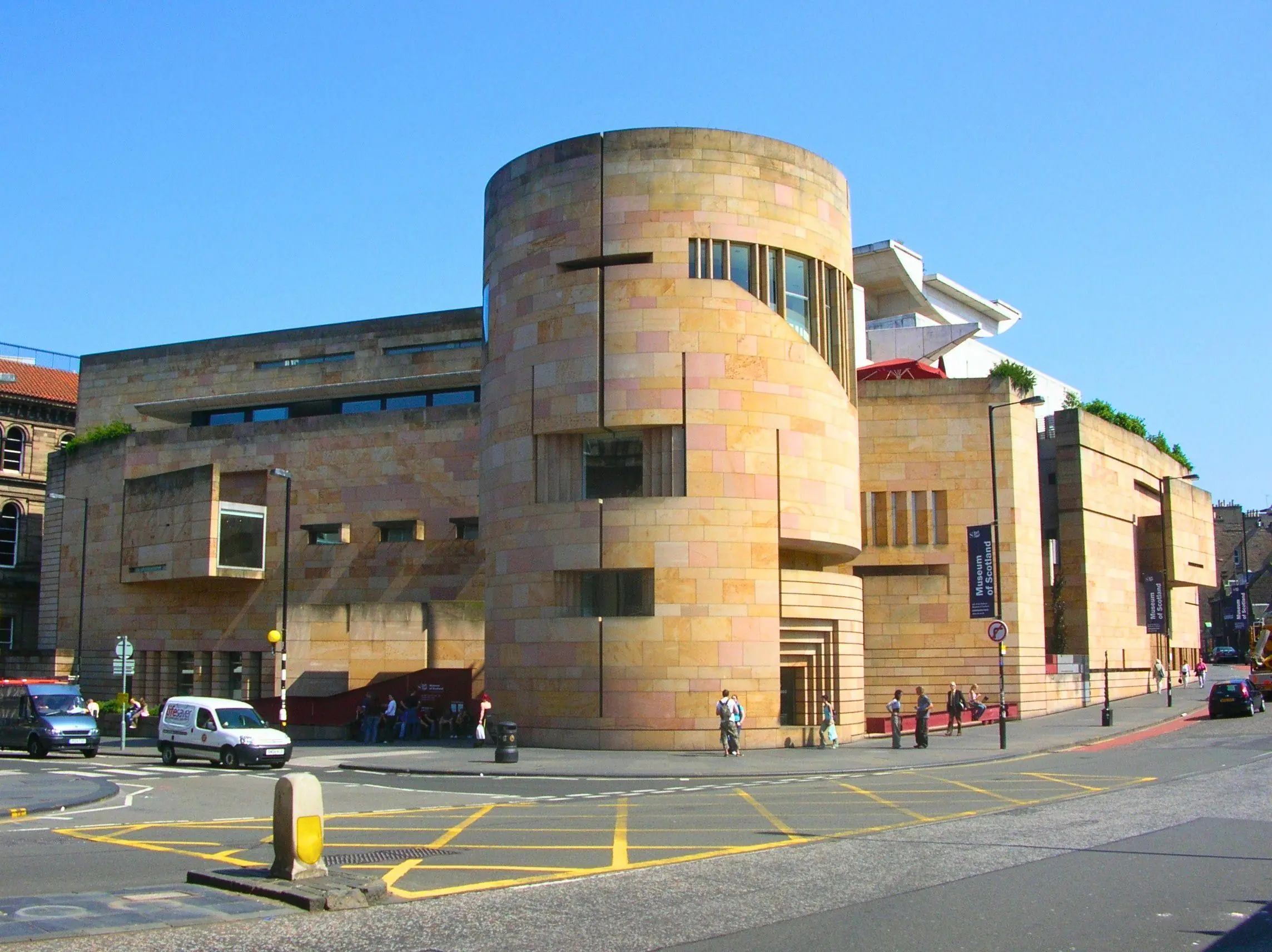
The National Museum of Scotland on Chambers Street is one of the most visited attractions in the UK outside of London, and for good reason. It is entirely free to enter and houses a sprawling collection that spans the natural world, world cultures, science, technology, and Scottish history.
Because the museum is actually two distinct buildings merged together—the Victorian-era Royal Museum and the modern Museum of Scotland—the layout can be confusing. You can easily spend an entire day getting lost in the stairwells and connecting corridors. This guide breaks down exactly how to navigate the space, which exhibits are worth your time, and how to handle the logistics of your visit.
Who is This Museum For?
The scale of the National Museum means you need a strategy based on your travel style and constraints.
- For the Time-Poor: If you only have 60 to 90 minutes, stick to the central Grand Gallery, watch the Millennium Clock chime on the hour, find Dolly the Sheep in the Science and Technology wing, and take the lift straight to the Level 7 rooftop terrace for city views.
- For Families: This is arguably the best indoor attraction in Edinburgh for children. Head straight to Level 1 for the Imagine gallery (designed for under-5s) or Level 5 for the Explore gallery, which features interactive science experiments, a giant hamster wheel, and a driving simulator.
- For Budget Travelers: The museum is 100% free, making it a cornerstone of any budget guide to Edinburgh. You don’t need a ticket, though donations are encouraged at the door. You can bring your own food and eat in the designated packed lunch areas on the lower ground floor.
Logistics and Entry Paths
The museum is located on Chambers Street in the Old Town, roughly a five-minute walk down the hill from the Royal Mile.
Choosing Your Entrance
There are two main ways to get into the building:
- The Main Entrance (Chambers Street): This is the large, street-level entrance in the modern building. It brings you into the Entrance Hall (Level 0). From here, you can access the cloakroom, the main shop, and the stairs/lifts up to the Grand Gallery. This entrance gets heavy foot traffic, especially when school groups arrive around 10:00 AM.
- The Tower Entrance (Corner of George IV Bridge and Chambers Street): This entrance is often quieter. It brings you directly into the Scottish History and Archaeology section. If you want to bypass the main crowds and start with Scotland’s past, use these doors.
Getting There
If you are using public transit, several local buses stop on George IV Bridge or South Bridge, both just a minute’s walk away. If you are using the City Sightseeing Hop-On Hop-Off Bus Tour, there is a dedicated stop right outside the museum on Chambers Street.
Cloakroom & Lockers: The cloakroom is located on Level 0 near the main entrance. Lockers require a £1 coin (which is refunded when you return the key). If you only have card, the museum shop can usually provide change if you make a small purchase.
Deep Dive: 5 Museum Highlights
With over 20,000 objects on display, trying to see everything will lead to museum fatigue. If you want to focus your visit, prioritize these five specific highlights.
1. The Grand Gallery Architecture
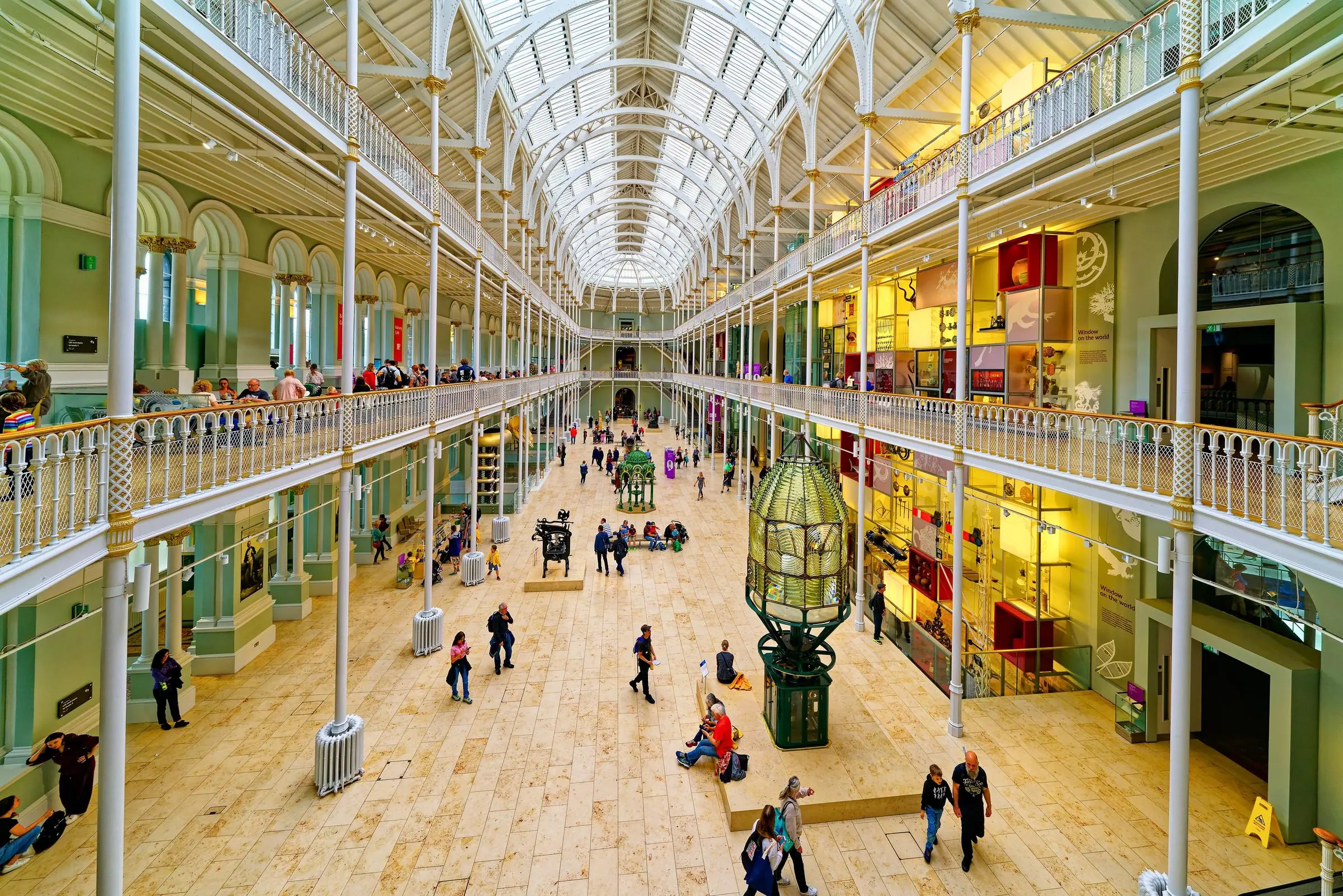
Even if you don’t look at a single exhibit, the Grand Gallery is worth stepping inside to see. Designed by Captain Francis Fowke and completed in 1866, the space is a soaring, light-filled “birdcage” of cast iron and glass. It was inspired by the Crystal Palace in London.
The gallery spans the entire length of the Victorian building. Take the stairs up to the Level 3 or Level 5 balconies for the best vantage points to photograph the architecture and the large-scale exhibits suspended from the ceiling, including a giant skull of a sperm whale.
2. The Millennium Clock Tower
Located at the far end of the Grand Gallery, the Millennium Clock is a towering, 10-meter-tall mechanical sculpture created to mark the year 2000. It is a complex, slightly dark piece of art that represents the best and worst of the 20th century, featuring moving figures, tragedies, and triumphs.
Local Tip: The clock chimes and animates fully on the hour, every hour. It draws a massive crowd. If you want a good view, arrive at 55 minutes past the hour and stand on the Level 2 balcony looking down, rather than crowding around the base on Level 1.
3. Dolly the Sheep
Located in the Science and Technology galleries on Level 1, you will find the stuffed remains of Dolly the Sheep. Born in 1996 at the Roslin Institute just outside Edinburgh, Dolly was the first mammal ever cloned from an adult somatic cell. She is displayed in a custom rotating case. The surrounding gallery does an excellent job of explaining the complex genetics behind her creation in plain English.
4. The Pictish Silver and Lewis Chessmen
To understand Scotland’s ancient roots, head to the Early People gallery on Level -1. Here you will find massive, heavy silver chains worn by the Picts (the ancient Celtic people of northern and eastern Scotland).
Nearby, you will also find a selection of the famous Lewis Chessmen. These 12th-century chess pieces, carved from walrus ivory, were discovered on the Isle of Lewis in 1831. (Note: The collection is split between this museum and the British Museum in London, but the pieces here are beautifully displayed).
5. The Level 7 Rooftop Terrace
Many visitors leave the museum without realizing there is a rooftop terrace offering panoramic views of the city.
How to find it: Go to the modern Scottish History building. Take the main lifts (elevators) located near the Kingdom of the Scots gallery all the way up to Level 7.
The terrace is open-air and provides unobstructed views of Edinburgh Castle, the Old Town skyline, and Arthur’s Seat. It is completely free to access and is one of the best photography spots in the city. It does close during high winds or heavy rain for safety reasons.
A 2-Hour Highlights Itinerary
If you want to see the best of the museum efficiently, follow this walking route:
National Museum Express Route
⏱️ Total: 2 hEnter via Chambers Street
Walk through the main entrance, drop your bags in the Level 0 lockers, and take the stairs up to Level 1.
The Grand Gallery & Dolly the Sheep
Walk the length of the Grand Gallery. Veer right into the Science and Technology wing to see Dolly the Sheep.
The Millennium Clock
Head back to the Grand Gallery and position yourself near the Millennium Clock just before the hour strikes to watch the mechanical show.
Scottish History & Lewis Chessmen
Cross over into the modern Scottish building. Head down to Level -1 to see the Lewis Chessmen and Pictish silver, then work your way up through the Kingdom of the Scots.
Rooftop Terrace
Take the lift from the Scottish History wing up to Level 7 for photos on the rooftop terrace before heading back down to exit.
Food and Drink Inside the Museum
The museum has several dining options, though they can be pricey.
- Balcony Café (Level 3): Offers coffee, cakes, and light sandwiches. It sits on an open balcony overlooking the Grand Gallery, making it a great spot for people-watching. It gets very busy around 11:00 AM.
- Museum Brasserie (Level 0): A more formal sit-down restaurant offering hot meals, burgers, and Scottish classics like Cullen Skink (smoked haddock soup).
- Packed Lunch Areas: If you are on a budget, buy a sandwich from the Sainsbury’s Local or Greggs across the street before you enter. You can eat your own food in the designated seating areas on the lower ground floor.
What to Do Nearby
Because the museum is centrally located, it pairs perfectly with other Old Town attractions.
Directly across the street is the statue of Greyfriars Bobby, the loyal Skye Terrier. Behind the statue is Greyfriars Kirkyard, a historic cemetery famous for its connections to the Covenanters and its inspiration for Harry Potter character names.
The museum is a 10-minute uphill walk from the castle. Castle tickets frequently sell out by midday during the summer and on weekends. You must book your entry slot in advance. Check Castle Ticket Availability
If you are interested in the darker side of Edinburgh’s history, the Blair Street Underground Vaults are located just around the corner off South Bridge. You can book a guided ghost and history tour to explore the 18th-century arches hidden beneath the city streets.
Keep Planning: If you have kids in tow, consider pairing the museum with a visit to Camera Obscura and World of Illusions, located near the Castle. It offers five floors of optical illusions and hands-on exhibits.
Where to Stay Near the Museum
Staying near Chambers Street puts you right in the heart of the Old Town, within walking distance of the Royal Mile, the Grassmarket, and Waverley Train Station. Use the map below to check current hotel and apartment rates in the immediate area.
Frequently Asked Questions
Do I need to book tickets in advance for the National Museum of Scotland?
No. General admission is completely free and you do not need to book a time slot in advance. You can simply walk in. However, some temporary special exhibitions (usually located on Level 3) do require a paid ticket which can be purchased at the museum or online.
How much time should I spend at the museum?
You can rush through the main highlights in 90 minutes, but to genuinely appreciate the exhibits, plan for 3 to 4 hours. Families with children often spend half a day here due to the interactive zones.
Is the museum wheelchair and pram accessible?
Yes. The museum is fully accessible. There are lifts connecting all floors, ramp access at the main entrances, and accessible toilets throughout the building. You can also borrow wheelchairs free of charge from the Level 0 information desk (booking in advance is recommended).
Can I take photographs inside?
Yes, photography for personal use is allowed and encouraged throughout the permanent galleries. Tripods and flash photography may be restricted in certain temporary exhibitions.
Is there a quiet time to visit?
The museum is quietest right when it opens at 10:00 AM on weekdays, or after 3:30 PM once the school groups have left. Weekends and rainy days are exceptionally busy.
Where is the best place to see the Millennium Clock?
The clock draws a large crowd on Level 1. For a better, less crowded view, walk up the stairs to the Level 2 or Level 3 balconies in the Grand Gallery and look down at the clock as it chimes.