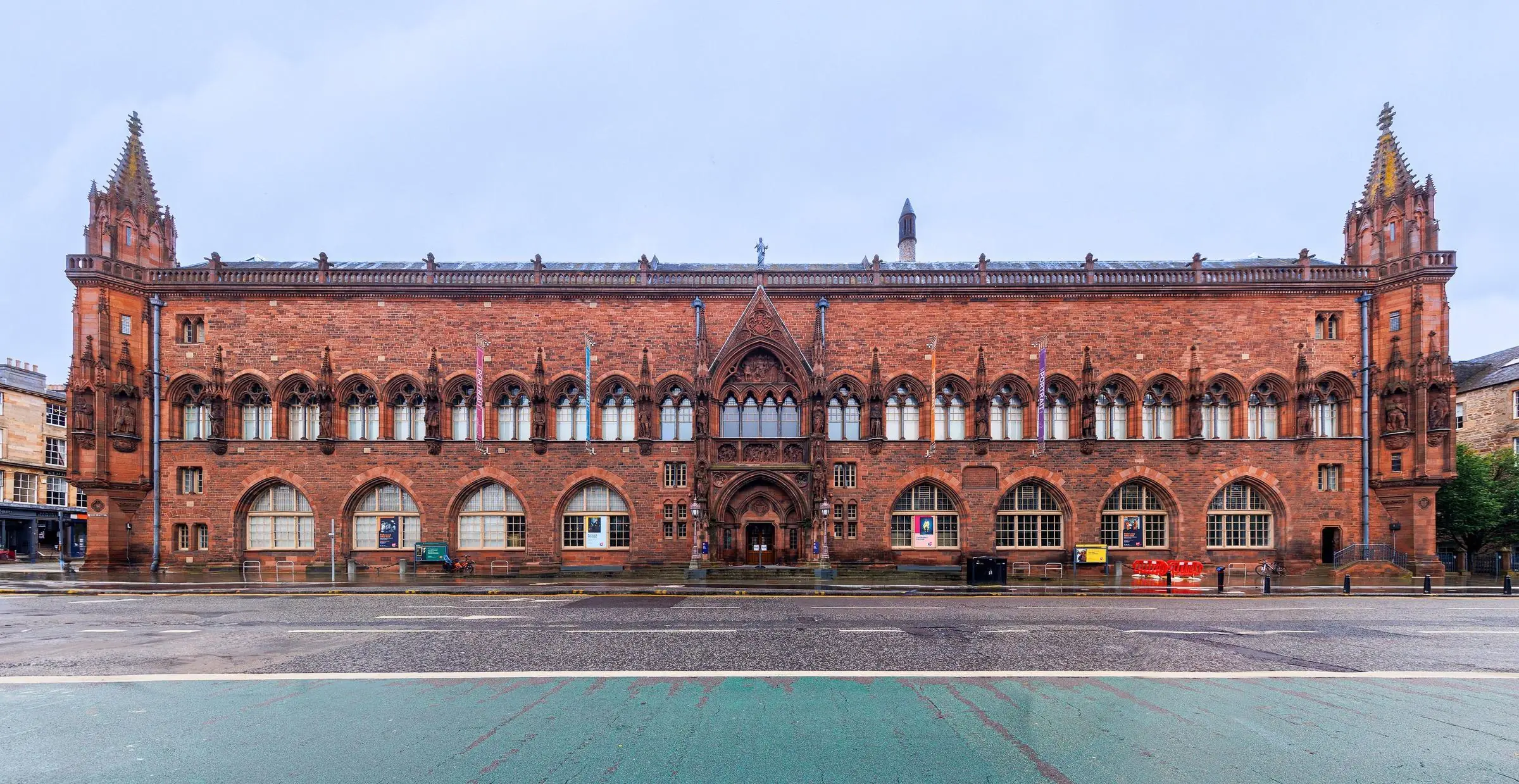
Standing on Queen Street, the Scottish National Portrait Gallery is impossible to miss. While the rest of Edinburgh’s New Town is built from uniform, grey Craigleith sandstone, the Portrait Gallery is a towering neo-Gothic palace made of vibrant red Corsehill sandstone.
Designed by Sir Robert Rowand Anderson and opened in 1889, it was the first purpose-built portrait gallery in the world. Today, it holds the visual history of Scotland, told through the faces of the people who shaped it—from monarchs and Enlightenment philosophers to modern-day athletes, actors, and scientists.
Best of all? It is completely free to enter. Whether you are a history enthusiast looking to trace the Jacobite uprisings or just need a quiet, beautiful space to escape the Edinburgh rain, this gallery delivers.
Logistics: Planning Your Visit
The gallery is located at 1 Queen Street, at the eastern end of the street where it meets York Place and North St David Street.
Essential Visitor Information
General Admission
- Opening Hours: Daily, 10:00 AM – 5:00 PM.
- Transit: The St Andrew Square tram stop is a 2-minute walk away.
- Buses: Multiple Lothian Buses stop on York Place and St Andrew Square.
- Accessibility: Fully wheelchair accessible with elevators to all floors.
If you are using the City Sightseeing Hop-On Hop-Off Bus Tour, there is a stop just around the corner on St Andrew Square, making it an easy addition to a broader sightseeing day.
Bag Policy & Lockers: Large backpacks and suitcases are not permitted in the galleries to protect the artwork. There are lockers available on the ground floor (you will need a £1 coin, which is refunded when you return the key).
Advice for Different Traveler Types
Because the gallery spans multiple floors and covers centuries of history, how you tackle it depends entirely on your schedule and travel style.
For the Time-Poor
If you only have 45 minutes to an hour, do not try to read every plaque. Focus entirely on the ground floor and the first floor.
The 45-Minute Highlights Route
⏱️ Total: 45 minThe Great Hall
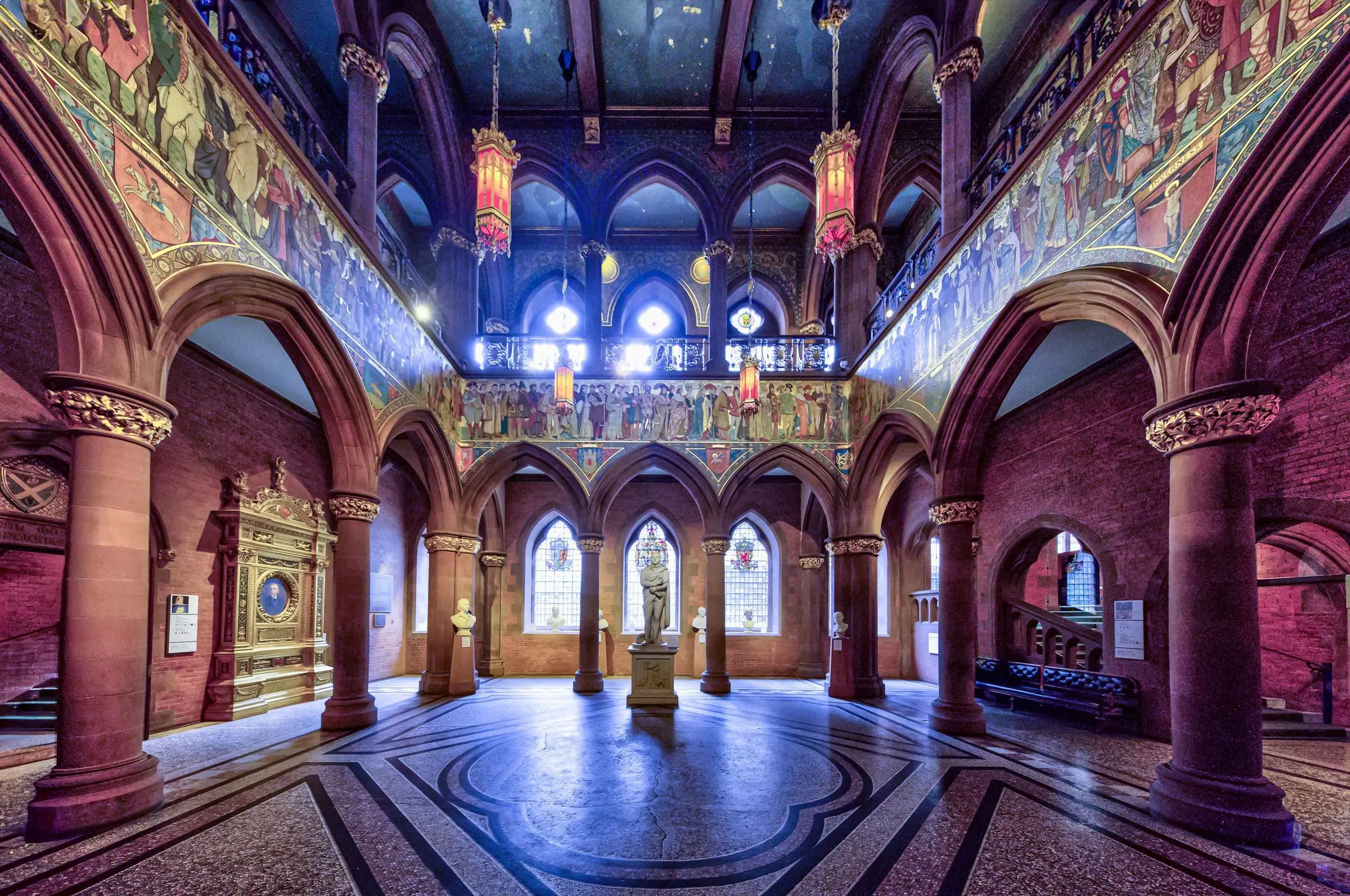
Walk through the main entrance and look up. Spend your first 10 minutes taking in the processional frieze and the starry ceiling.
Mary Queen of Scots & The Jacobites
Head to the historical galleries on the first floor to see the Blairs Memorial Portrait of Mary Queen of Scots and the iconic imagery of Bonnie Prince Charlie.
The Modern Wing
Skip the Enlightenment for now and head to the contemporary galleries to see familiar faces like Sean Connery, Tilda Swinton, and modern Scottish cultural icons.
For Families
Art galleries can be a tough sell for younger children, but this building feels like a castle, which helps. The gallery often provides free “trail” booklets at the front desk to turn the visit into a scavenger hunt. The Great Hall is visually stimulating, and the ground-floor cafe is spacious and relaxed, making it a good pit stop for cake and juice.
For Budget Travelers
This is one of the best free attractions in Edinburgh. You can easily spend two hours here without spending a penny. If you want to contextualize the history you see on the walls, pair your free gallery visit with an affordable Historical Walking Tour of the Old Town later in the day.
Deep Dive: 5 Key Landmarks Inside the Gallery
The collection is vast, but these five specific areas and artworks form the backbone of the Scottish National Portrait Gallery experience.
1. The Great Hall Frieze and Ceiling
You don’t even have to enter an exhibition room to see the gallery’s most impressive feature. The Great Hall acts as the central atrium.
Designed by William Hole in the late 19th century, the upper walls are wrapped in a massive processional frieze. It depicts a chronological timeline of Scottish history, featuring 155 prominent figures marching toward the entrance. You will spot Saint Ninian, Robert the Bruce, William Wallace, and Robert Burns.
Above the frieze is a spectacular ceiling painted with the constellations of the zodiac, mapped out exactly as the night sky would have appeared over Scotland. The sheer scale of the Great Hall, with its Gothic arches and detailed stonework, makes it one of the most striking interior spaces in Edinburgh.
2. Mary Queen of Scots Imagery
Scotland’s most famous and tragic monarch is heavily featured on the first floor. The centerpiece is the Blairs Memorial Portrait.
This life-size portrait was painted after her execution in 1587, likely commissioned by one of her ladies-in-waiting. It is a powerful piece of propaganda and memorialization. If you look closely at the background on the right side of the canvas, you can see a detailed, miniature depiction of her actual execution at Fotheringhay Castle.
To fully understand the turbulent era depicted in these rooms, many visitors follow up their gallery trip with a visit to the Palace of Holyroodhouse, Mary’s former home at the bottom of the Royal Mile.
3. The Allan Ramsay Portraits (The Enlightenment)
During the 18th century, Edinburgh was a powerhouse of intellectual thought, known as the Scottish Enlightenment. The gallery dedicates significant space to this era, and the portraits by Allan Ramsay are the highlight.
Ramsay was one of the most sought-after portrait painters of his day. His portrait of the philosopher David Hume is a standout—it captures Hume not in formal, stiff aristocratic robes, but in a relaxed, intellectual pose that reflects the changing attitudes of the era. You will also find Ramsay’s portrait of Jean-Jacques Rousseau, painted when the French philosopher sought refuge in Britain.
4. The Modern National Heroes Wing
The gallery is not just a repository for the dead; it actively collects portraits of living Scots who have made significant contributions to global culture, science, and sport.
Located in the contemporary galleries, this section feels vastly different from the oil paintings downstairs. You will find striking photographs, modern sculptures, and mixed-media portraits. Look out for the intense, large-scale portrait of actor Sean Connery, the vibrant depictions of author Muriel Spark, and photographs of modern athletes like Andy Murray.
5. The Photography Collections
Scotland played a pioneering role in the early days of photography, and the gallery holds one of the most important early photographic collections in the world.
The highlight here is the work of David Octavius Hill and Robert Adamson. In the 1840s, just a few years after photography was invented, this Edinburgh-based duo produced thousands of calotypes (an early photographic process). Their portraits of Edinburgh fishwives, local ministers, and intellectuals are some of the earliest examples of documentary photography. The gallery regularly rotates these light-sensitive works, so the specific photographs on display change, but the dedicated photography wing is always worth exploring.
Keep Planning: If you are fascinated by the history of visual arts and illusions in Edinburgh, consider walking up to the Royal Mile to visit Camera Obscura and World of Illusions.
Local Tips for Visiting
1. Eat at Cafe Portrait Museum cafes are often overpriced and underwhelming, but Cafe Portrait is a genuine exception. Run by a local catering company, it is famous for its massive, freshly baked scones and excellent soups. It gets very busy around 1:00 PM, so aim for an early lunch or a mid-afternoon tea break.
2. Look at the Exterior Statues Before you walk in, take a moment to look at the exterior of the building. The red sandstone facade is dotted with statues of historical figures, including Mary Queen of Scots, James VI, and William Wallace. The building itself was designed to be a “shrine” to Scottish history.
3. Combine with the New Town The gallery sits on the edge of the New Town. After your visit, walk west along Queen Street to admire the Georgian architecture, or head down into Stockbridge for independent boutiques and excellent pubs.
4. Check for Temporary Exhibitions While the permanent collection is free, the gallery occasionally hosts major touring exhibitions on the ground floor that may require a paid ticket. Check the screens in the lobby when you arrive to see what is on.
Where to Stay Nearby
The gallery is located in the New Town, which is an excellent, slightly quieter base for exploring Edinburgh compared to the bustling Old Town. The area around St Andrew Square and York Place offers great transit links (including the tram direct to the airport).
Frequently Asked Questions
How much does it cost to enter the Scottish National Portrait Gallery?
Entry to the permanent collection is completely free. You do not need to book tickets in advance. Occasionally, special temporary exhibitions may carry an entry fee, but the vast majority of the building is free to explore.
How long should I spend at the gallery?
Most visitors spend between 1.5 to 2 hours here. If you are a fast walker or short on time, you can see the Great Hall and the main historical highlights in about 45 minutes. Art and history enthusiasts could easily spend 3 hours reading the detailed plaques.
Is the gallery accessible for wheelchair users?
Yes. There is ramp access at the main entrance on Queen Street, and spacious elevators provide access to all floors. The galleries are wide and easy to navigate, and there are accessible restrooms on site.
Can I take photographs inside?
Yes, photography for personal, non-commercial use is allowed in the permanent galleries. However, flash photography and tripods are strictly prohibited. Some temporary exhibitions may have specific “no photography” rules, which will be clearly signposted.
What is the difference between the Portrait Gallery and the National Gallery?
The Scottish National Portrait Gallery (on Queen Street) focuses on the subjects of the paintings—the people who shaped Scottish history. The Scottish National Gallery (on The Mound) focuses on fine art and features works by international masters like Titian, Monet, and Van Gogh, alongside Scottish landscape painters. Both are free to visit.
Are there guided tours available?
The gallery offers free, volunteer-led highlight tours on select days (usually advertised on a board in the main entrance). Alternatively, you can download the Smartify app on your phone, which offers free audio guides and information on specific artworks when you scan them with your camera.