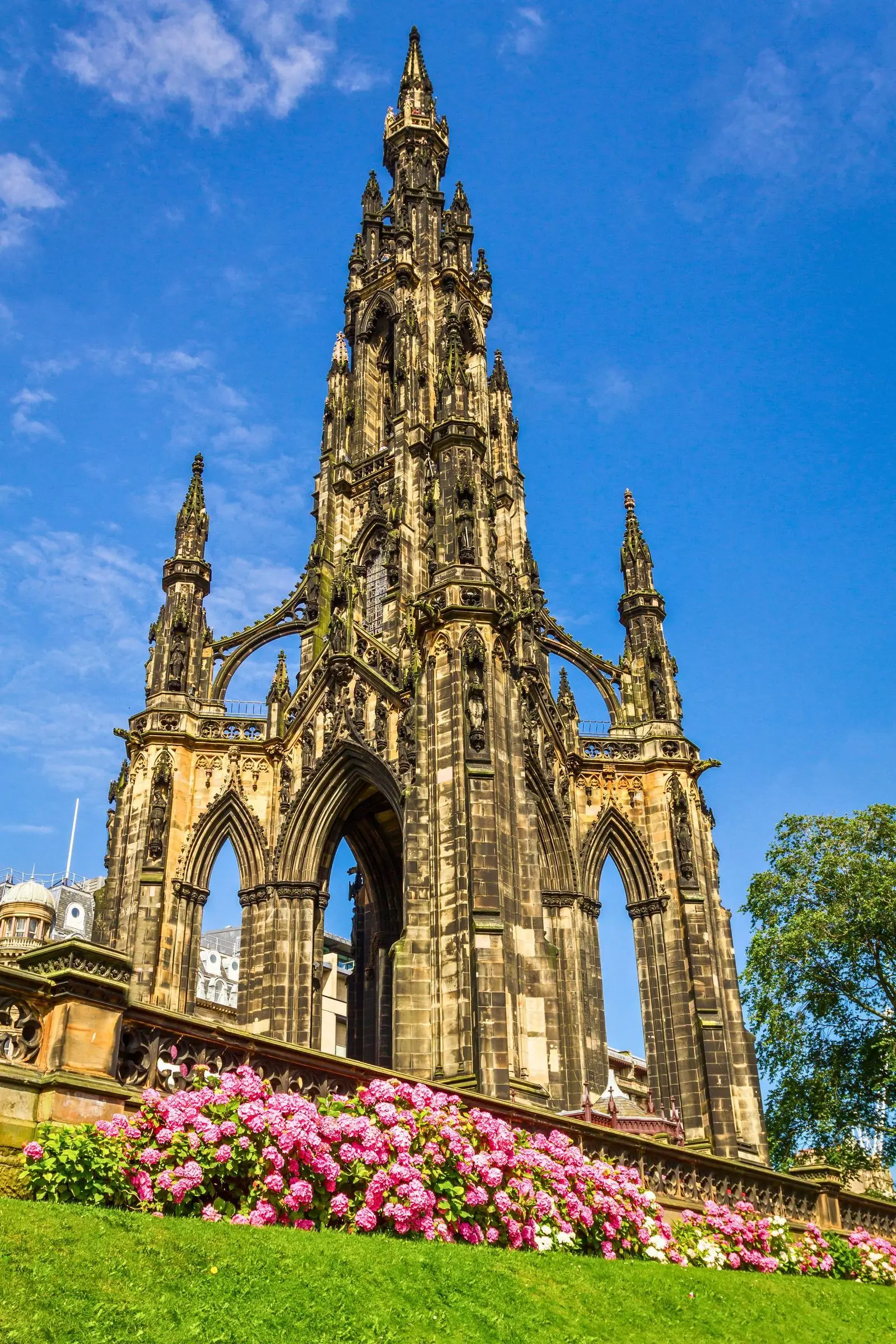
Rising like a soot-blackened gothic rocket ship from the greenery of Princes Street Gardens, the Scott Monument is one of Edinburgh’s most distinct landmarks. Built in the 1840s to honor the Scottish novelist and poet Sir Walter Scott, it holds the objective title of the largest monument dedicated to a writer anywhere in the world.
For many visitors, it’s simply a striking backdrop for photos taken from the New Town. But for those willing to tackle its notoriously tight spiral staircase, the monument offers a physical challenge rewarded by some of the best panoramic views of the city center.
Whether you plan to climb to the very top or just want to admire the stonework from the ground before heading to the nearby National Gallery, here is exactly what you need to know to plan your visit.
5 Structural Highlights to Look For
The monument was designed by George Meikle Kemp, a self-taught architect and carpenter who won the design competition under a pseudonym. His Victorian Gothic vision resulted in a structure that is incredibly dense with detail. Even if you don’t buy a ticket to climb, you can spot several of these features from the pavement.
1. The Marble Statue of Sir Walter Scott
At the base of the monument, sheltered beneath the central arches, sits a massive statue of Sir Walter Scott resting after writing, accompanied by his favorite dog, Maida. Carved by John Steell from a single, massive block of white Carrara marble, the statue’s bright white color intentionally contrasts with the dark sandstone of the spire above it.
2. The 64 Character Statues
If you look closely at the niches carved into the monument’s spire, you will see dozens of small figures. There are 64 statues in total, each representing a character from Scott’s famous novels (such as Ivanhoe, Rob Roy, and Waverley). They were carved by various Scottish sculptors over several decades. Bring a zoom lens or binoculars if you want to see the details of the figures near the top.
3. The Narrow Spiral Staircase
The climb is an attraction in itself. There is no elevator; the only way up is via a 287-step spiral stone staircase. The stairs are broken up by the viewing platforms, giving you a chance to catch your breath. However, be warned: as the spire narrows toward the top, so does the staircase. The final stretch to the highest platform is incredibly tight, requiring you to squeeze your shoulders and duck your head.
The staircase is completely enclosed, dimly lit, and gets progressively narrower. If you suffer from claustrophobia, vertigo, or have mobility issues, you should skip the climb and enjoy the monument from the gardens.
4. The Museum Room Stained Glass
When you reach the first viewing platform, you can step inside the Museum Room. This small, enclosed space features four beautiful stained glass windows depicting the coat of arms of Edinburgh, the arms of Scotland, and various patron saints. It’s a quiet, wind-free spot to learn a bit more about Scott’s life and Kemp’s architectural drawings.
5. The Three Viewing Platforms
The monument doesn’t just have one roof deck; it has three distinct galleries.
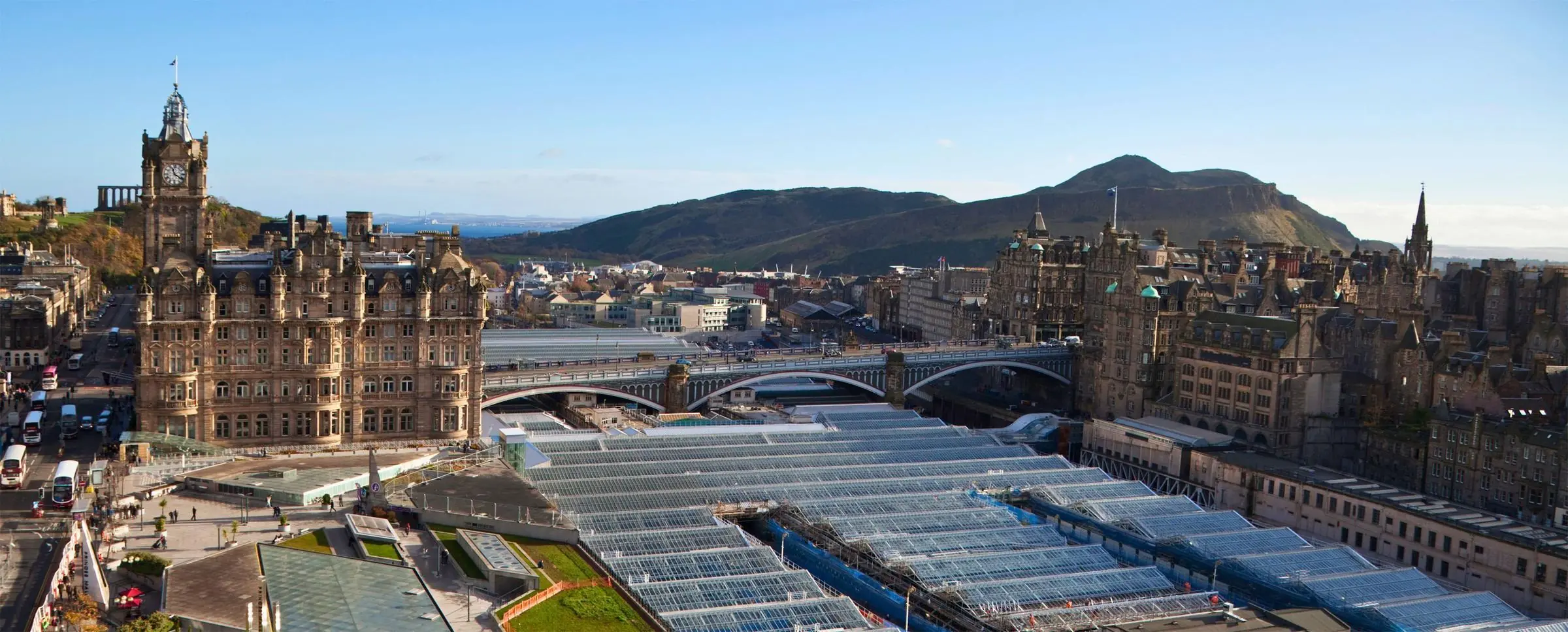
- The First Gallery: The widest and lowest platform, offering great views of Princes Street and the Balmoral Hotel clock tower.
- The Second Gallery: Higher up, giving you a clearer line of sight over the Waverley Station roof toward Calton Hill.
- The Third Gallery: The highest point you can reach. It is tiny, often windy, and offers an unobstructed, sweeping view of Edinburgh Castle and the Old Town.
Climbing Admission & Logistics
Unlike major attractions like the Castle or the Palace of Holyroodhouse, the Scott Monument is a low-key, city-run site.
At a Glance: Visiting the Monument
Admission Prices
- Adults: £8.00
- Children/Concessions: £6.00
- Where to buy: Tickets are purchased on the day at the small kiosk at the base of the monument. Advance online booking is generally not required or available for standard entry.
Opening Times
- Summer (Apr-Sep): 10:00 AM – 5:00 PM (Last admission 4:30 PM)
- Winter (Oct-Mar): 10:00 AM – 4:00 PM (Last admission 3:30 PM)
- Note: The monument occasionally closes during high winds or severe weather for safety.
Ground Level vs. Climbing
You do not need a ticket to walk up to the base, view the marble statue of Scott, or take photos of the architecture. The ticket is strictly for accessing the staircase and the viewing platforms. If you are short on time or don’t want to climb, you can easily appreciate the monument for free in about 10 minutes.
Advice for Different Traveler Types
For the Time-Poor If you only have a weekend in the city, you don’t necessarily need to climb the monument. You will get equally good (and free) views of the city skyline by walking up Calton Hill. Spend 10 minutes admiring the Scott Monument from the outside, then use your time to join a City Highlights Walking Tour to get your bearings.
For Budget Travelers At around £8, the climb is one of the cheaper paid attractions in the city center. However, if you are on a strict budget, skip the climb. The best photos of the monument are taken from a distance anyway—specifically from the pathways inside Princes Street Gardens or from the Mound.
For Families Older kids and teenagers usually love the slightly spooky, castle-like feel of the spiral stairs. However, this is not an attraction for toddlers or infants. You cannot bring a stroller inside, and carrying a baby up the final, narrowest section of the stairs is highly impractical and not recommended.
Local Tips for Your Visit
- Leave the Backpack: Because the upper stairs are so narrow, bulky backpacks will scrape against the historic stone (and annoy people trying to pass you). Travel light, or leave your bags at a luggage storage facility near Waverley Station.
- The “Black” Stone: Visitors often ask why the monument looks burnt. It isn’t. It was built using sandstone from the nearby Binny Quarry, which contains natural oils. During Edinburgh’s industrial era (when it was nicknamed “Auld Reekie”), the oily stone acted like a magnet for coal smoke and soot, permanently staining it black.
- Best Time for Photos: If you are photographing the monument from the outside, the late afternoon sun hits the western face beautifully. If you are climbing for views, go right when it opens at 10:00 AM to avoid getting stuck behind slow climbers on the narrow stairs.
- Combine with a Bus Tour: The monument sits at a major transit hub. If you are using the Hop-On Hop-Off Bus Tour, the Waverley Bridge stop is less than a two-minute walk from the monument’s base.
Getting There & Context
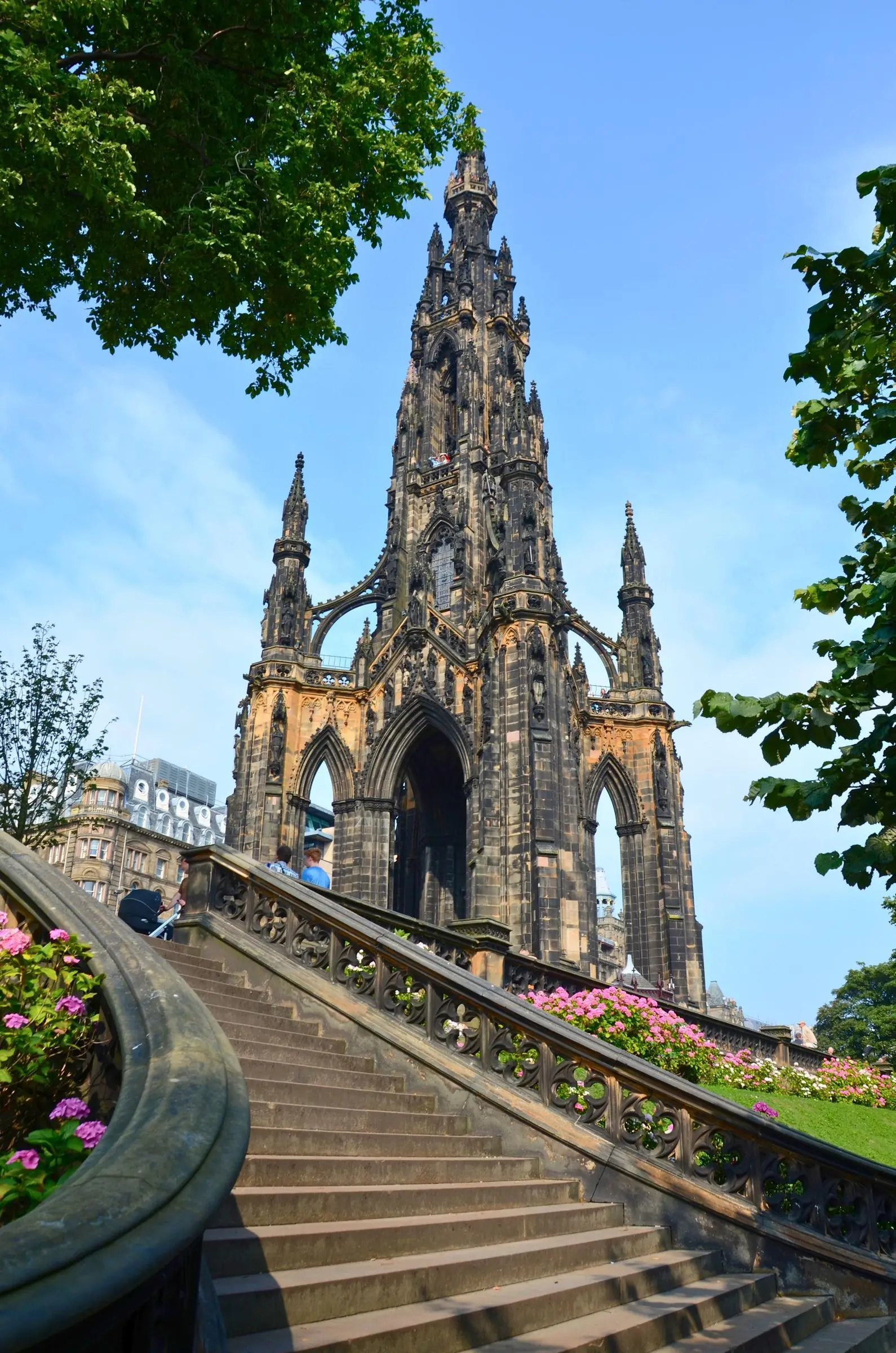
The Scott Monument is impossible to miss. It is located in East Princes Street Gardens, directly across from the Jenners building and right next to Waverley Station.
- By Train: Exit Edinburgh Waverley via the Princes Street/Waverley Steps exit. The monument will be immediately to your left.
- By Tram: The Princes Street tram stop is a 3-minute walk away. Read our tram guide for ticketing details.
- By Bus: Almost every major city bus routes through Princes Street.
If you want to dive deeper into Edinburgh’s history after your climb, you are perfectly positioned to walk up the Mound toward the Old Town to explore the Blair Street Underground Vaults or grab a pint at one of the best pubs on the Royal Mile.
Keep Planning: If you enjoy historic architecture and city views, read our guide to visiting Edinburgh Castle, which dominates the skyline just a short walk away.
Where to Stay Nearby
Staying near Princes Street puts you right on the border of the Old and New Towns, making it the most convenient base for sightseeing. Use the map below to check real-time availability and pricing for hotels and apartments near the monument.
Frequently Asked Questions
How many steps are in the Scott Monument?
There are 287 steps to the very top viewing platform. The climb is broken up by a few lower galleries where you can stop and rest.
Do I need to book Scott Monument tickets in advance?
No. Tickets are generally only sold on the day at the kiosk located at the base of the monument. You cannot usually book standard entry tickets online in advance.
Is the Scott Monument accessible for wheelchairs?
Unfortunately, no. Due to the historic nature of the 1840s architecture and the reliance on a narrow spiral staircase, there is no elevator and the upper levels are not wheelchair accessible. The ground-level marble statue can be viewed from the paved paths of Princes Street Gardens.
How long does it take to visit?
If you are climbing to the top, allow about 30 to 45 minutes to navigate the stairs, take photos from the platforms, and view the museum room. If you are just viewing it from the outside, 10 minutes is plenty.
Why is the Scott Monument black?
The monument was built using Binny sandstone, which naturally contains shale oil. During the 19th and early 20th centuries, the heavy coal smoke from Edinburgh’s chimneys stuck to the oily stone, permanently staining it black.
Are there toilets at the Scott Monument?
There are no public toilets inside the monument itself. However, there are public facilities located nearby inside Waverley Station (which are free to use) and within Princes Street Gardens.