Sitting squarely on The Mound, dividing Edinburgh’s medieval Old Town from its Georgian New Town, the Scottish National Gallery (officially rebranded as the National Galleries of Scotland: National) houses one of the best fine art collections in the world.
Unlike many major European galleries, the permanent collection here is completely free to enter. You can walk off Princes Street, bypass the ticket desks, and be standing in front of a Vermeer or a Van Gogh within three minutes.
This guide breaks down exactly how to navigate the gallery, which masterpieces to prioritize, and how to make the most of the newly opened Scottish wings without getting overwhelmed by the layout.
Who is this for?
Because the gallery is free and centrally located, it fits easily into almost any Edinburgh itinerary. Here is how to approach it based on your travel style:
- The Time-Poor: If you only have 45 minutes, skip the upper levels. Enter via the Princes Street Gardens entrance, walk straight into the new Scottish Galleries to see Raeburn’s Skating Minister, then head up the stairs to the main floor to catch the Impressionists (Monet, Van Gogh) before leaving.
- Budget Travelers: This is one of the best free activities in the city. Pair a morning here with a picnic in the adjacent Princes Street Gardens, then join a historical walking tour in the afternoon to keep your daily spend incredibly low.
- Families: Art museums can be a hard sell for young kids, but the gallery makes it easy. Ask the information desk for the free family trails and sketching materials. The building is fully accessible for strollers via the Gardens entrance, and the ground-floor cafe is spacious and loud enough that you won’t feel self-conscious if your toddler acts up.
Architectural Significance
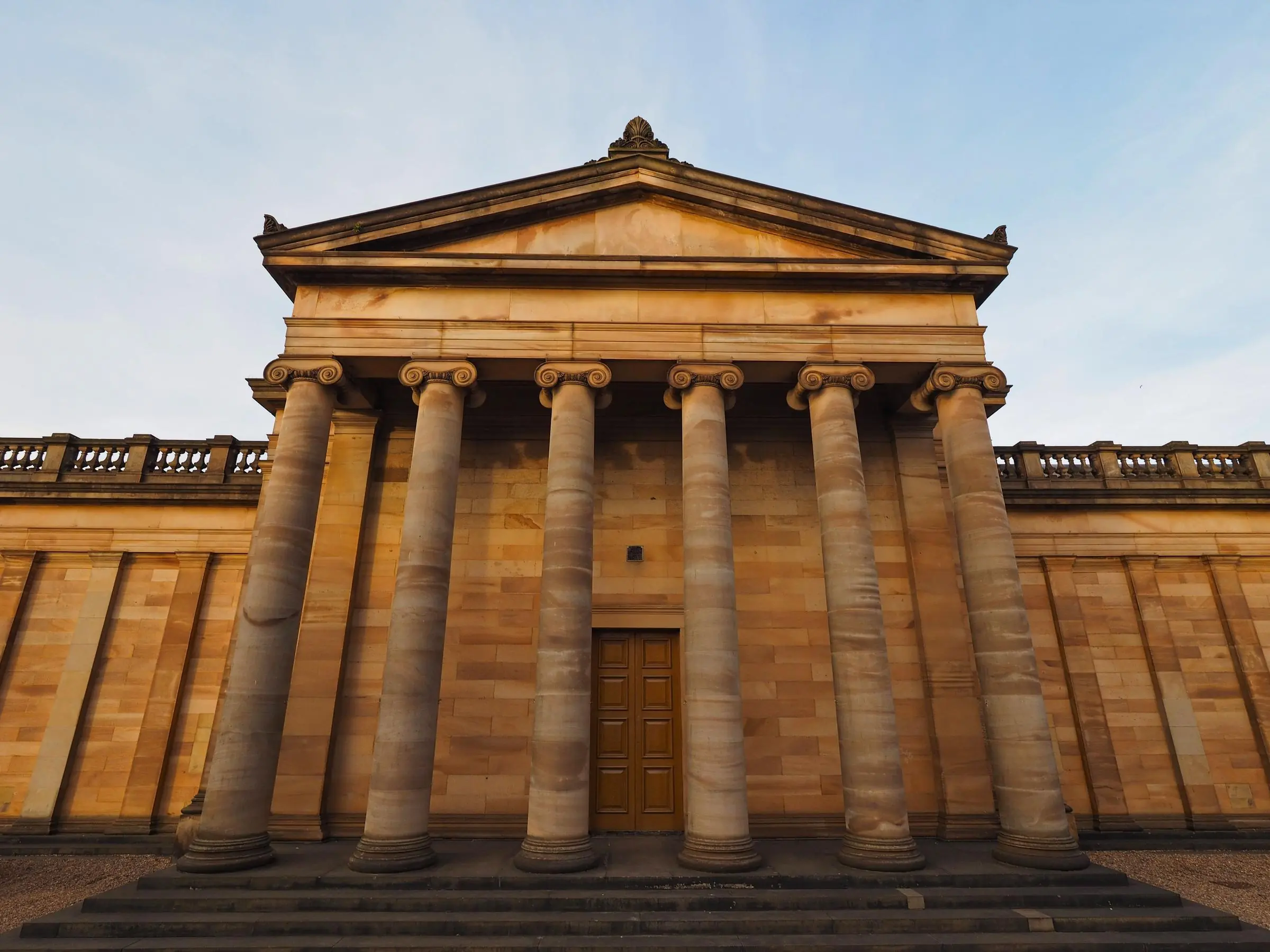
Before you look at the art on the walls, it is worth looking at the walls themselves. The building was designed by William Henry Playfair, the architect largely responsible for Edinburgh’s reputation as the “Athens of the North.”
Completed in 1859, the neoclassical temple was built to house the Royal Scottish Academy (which sits directly in front of it) and the National Gallery. Playfair designed the building to be viewed from all sides, which is why it features imposing Ionic porticoes on both its north and south ends.
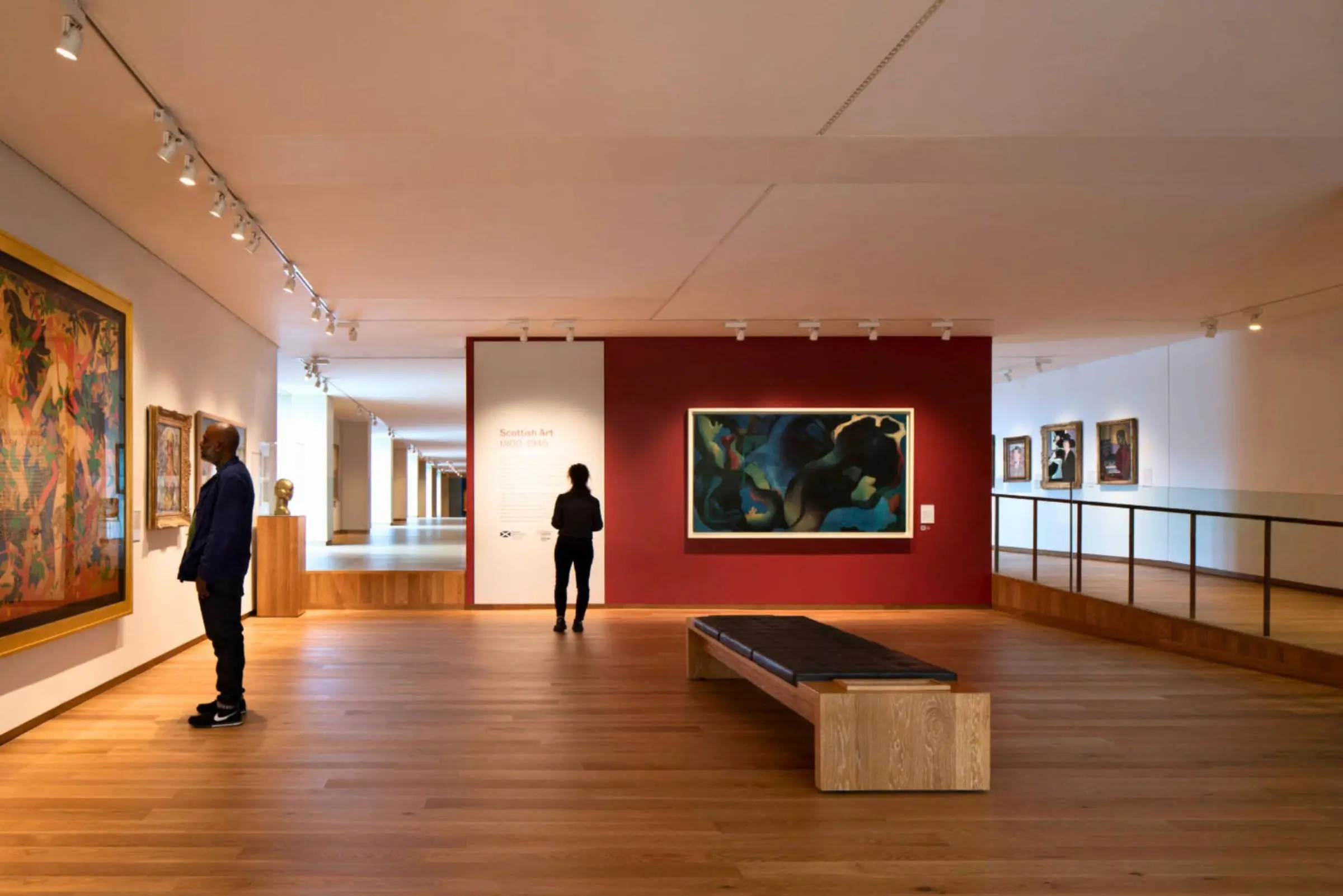
In 2023, the gallery completed a massive £38 million renovation. The project excavated the area beneath the East Princes Street Gardens to create a sprawling, light-filled lower level dedicated entirely to Scottish art. Large windows now look out directly onto the gardens, connecting the landscape paintings inside with the actual Scottish landscape outside.
5 Masterpiece Highlights
The collection spans from the early Renaissance to the early 20th century. While you will find heavy hitters like Titian, Rembrandt, and Velázquez, these five specific highlights offer a perfect cross-section of the gallery’s strengths.
1. The Reverend Robert Walker Skating on Duddingston Loch (Henry Raeburn)
Colloquially known as The Skating Minister, this small, deceptively simple painting from the 1790s is essentially Scotland’s Mona Lisa. It depicts a minister gliding across a frozen loch in a stark black suit, his arms folded in quiet concentration. It is a masterpiece of silhouette and motion, capturing the Scottish Enlightenment’s blend of strict Presbyterian discipline and quiet physical grace. You will find it holding court in the new Scottish Galleries on the lower level.
2. Olive Trees (Vincent van Gogh)
Painted in 1889 during Van Gogh’s time at the asylum in Saint-Rémy, this piece vibrates with energy. The swirling, thick impasto brushstrokes make the olive grove look as though it is writhing in the wind against the backdrop of the Alpilles mountains. It is located on the main floor in the Impressionist and Post-Impressionist rooms, usually hung near works by Gauguin and Cézanne.
3. Poplars on the Epte (Claude Monet)
Monet painted his famous poplar series from a small boat floating down the River Epte. The gallery holds a stunning example from 1891. The vertical lines of the trees contrast sharply with the sweeping, curved S-shape of the riverbank. The way Monet captures the fleeting afternoon light on the leaves is a masterclass in Impressionism.
4. Margaret Lindsay of Evelick (Allan Ramsay)
Allan Ramsay was the premier portrait painter of the mid-18th century, and this portrait of his second wife is widely considered his finest work. Unlike the stiff, formal portraits commissioned by royalty, this painting is deeply intimate. She is shown arranging flowers, looking up as if the viewer has just walked into the room. The delicate rendering of the lace and the soft, natural lighting make it a standout in the Scottish collection.
5. The New Scottish Galleries (1800–1945)
Rather than a single painting, this entire newly opened wing is a highlight. It traces the evolution of Scottish art from the romanticized Highland landscapes of the 19th century to the bold, colorful works of the Scottish Colourists in the 1920s. Look out for William McTaggart’s stormy, proto-impressionist seascapes and the striking, modern designs of Charles Rennie Mackintosh.
Don’t miss the hidden McTaggart: When looking at William McTaggart’s The Sailing of the Emigrant Ship, step back about ten feet. The chaotic brushstrokes suddenly resolve into a heartbreaking scene of families watching a ship leave for America—a poignant commentary on the Highland Clearances.
Navigating the Gallery
The gallery is split across three main levels. It is easy to get turned around, so here is the most logical way to tackle the building.
Suggested 2-Hour Route
⏱️ Total: 2 hThe Lower Level: Scottish Art
Start at the Gardens Entrance. This puts you directly into the new Scottish Galleries. Spend your first 45 minutes walking chronologically through Scottish art history, culminating with the Scottish Colourists and The Skating Minister.
The Main Floor: European Masters
Take the stairs or elevator up to the main floor. This is the historic Playfair building. The rooms are laid out enfilade (one leading directly into the next). Start at the south end with the Renaissance masters (Raphael, Titian) and walk north through the Dutch Golden Age (Rembrandt, Vermeer) until you reach the Impressionists (Monet, Degas, Van Gogh) at the far end.
The Upper Level: Early Renaissance
If you have time, head up the small staircases to the upper level. These intimate, quieter rooms hold smaller, older works, including exquisite early Renaissance altarpieces and religious icons.
Crowd Tips and Logistics
Because it is free and sits right on the main tourist thoroughfare between the Old Town and the New Town, the gallery sees heavy foot traffic.
When to visit: The gallery opens at 10:00 AM. If you want to view the Impressionists without someone’s smartphone in your line of sight, be at the doors at 9:55 AM and walk straight to the north end of the main floor. Alternatively, the crowds thin out significantly after 3:30 PM.
Entrances: There are two main entrances. The historic entrance is up the steps on The Mound. The modern, accessible entrance is down the hill in East Princes Street Gardens. If you have mobility issues, a stroller, or just want to avoid climbing stairs, use the Gardens entrance.
Bag Policy and Cloakroom: Large backpacks and suitcases are not permitted in the galleries. There are self-service lockers available near the Gardens entrance (you will need a £1 or £2 coin, which is refundable). Small daypacks are allowed but must be worn on your front or carried by your side to prevent accidental bumps against the artwork.
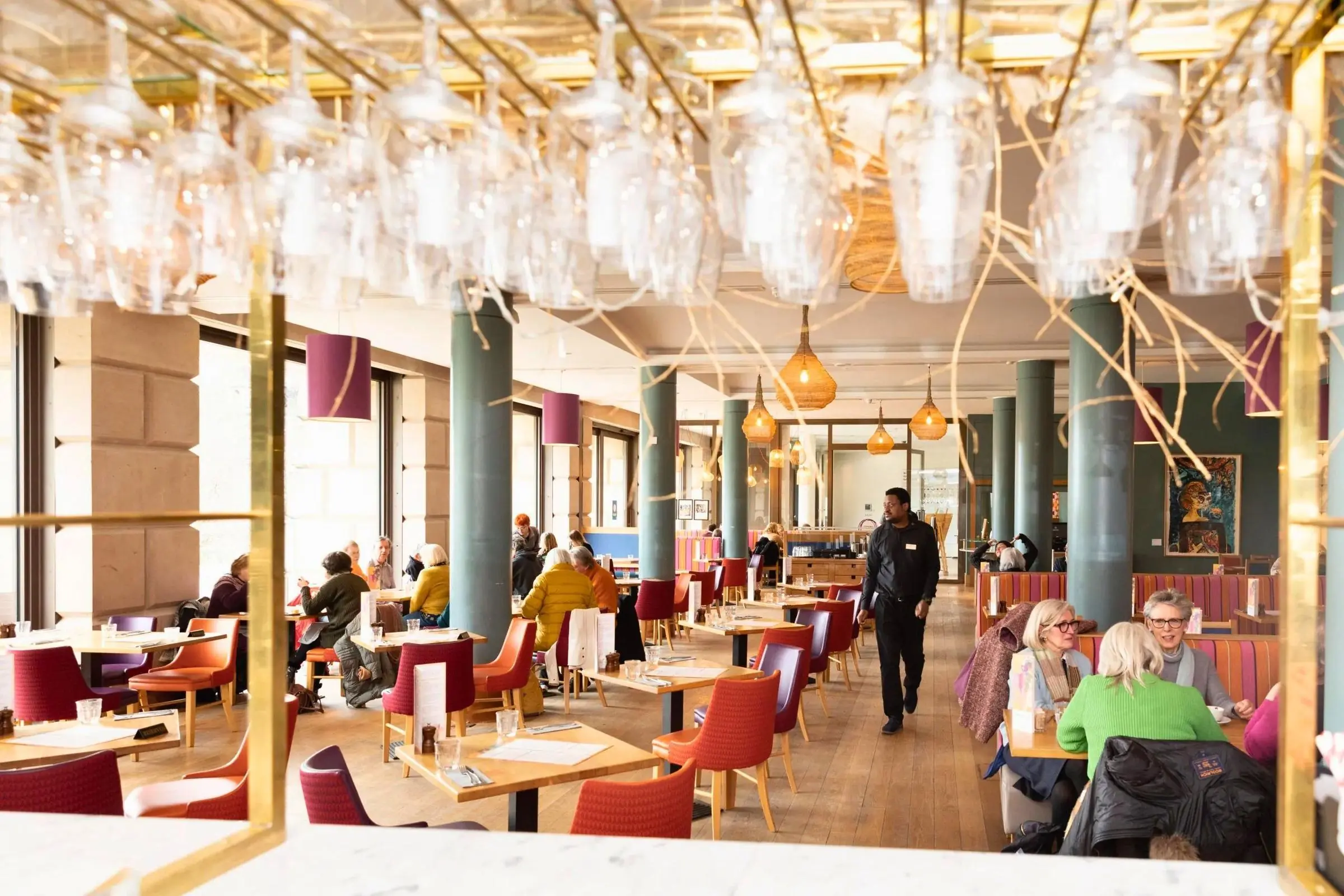
Food and Drink: The Scottish Cafe & Restaurant, located at the Gardens entrance level, is genuinely excellent. It champions local Scottish produce (their Cullen Skink is fantastic) and offers lovely views over the gardens. It gets very busy for lunch between 12:30 PM and 2:00 PM, so book ahead or aim for an early coffee.
Connecting Your Itinerary
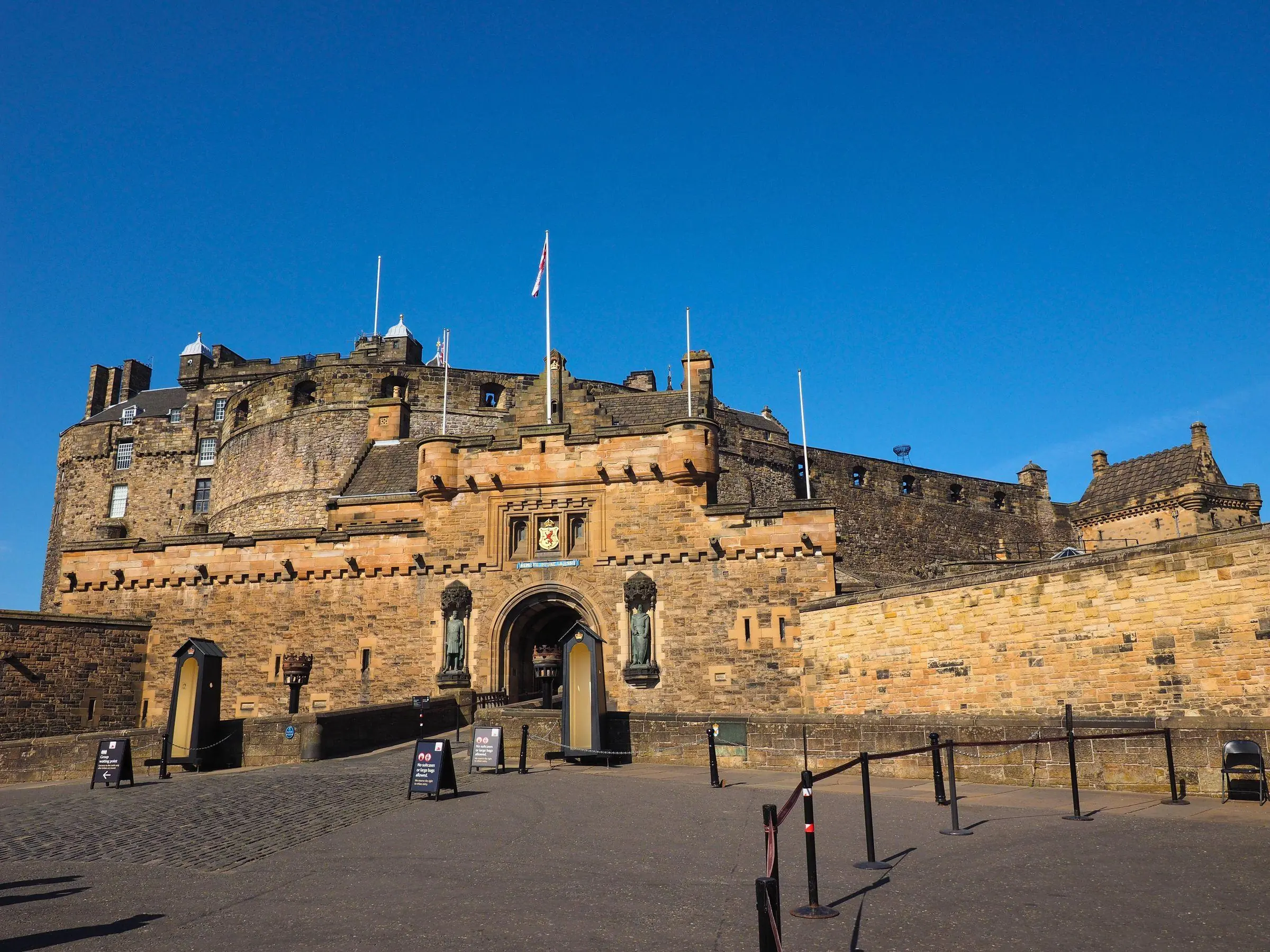
The National Gallery’s location makes it the perfect pivot point for your day. From the front doors on The Mound, you are a steep 10-minute walk up to Edinburgh Castle and the top of the Royal Mile.
If you plan to visit the castle after the gallery, be aware that castle tickets frequently sell out days in advance during the summer and holidays. You cannot reliably buy them at the gate.
If you are heading up the hill to the castle after the gallery, you must have a pre-booked time slot. Walk-up tickets are rarely available from May through September.
If you prefer to rest your legs after walking the gallery floors, the main stop for the Hop-on Hop-off Bus tours is located on Waverley Bridge, just a 3-minute walk east of the gallery.
Edinburgh Hop-On Hop-Off Bus
- Stops right near the National Gallery
- 24-hour unlimited travel
- Audio commentary included
Old Town History Walking Tour
- Starts near the Royal Mile
- Explores the medieval closes
- Great context after seeing the art
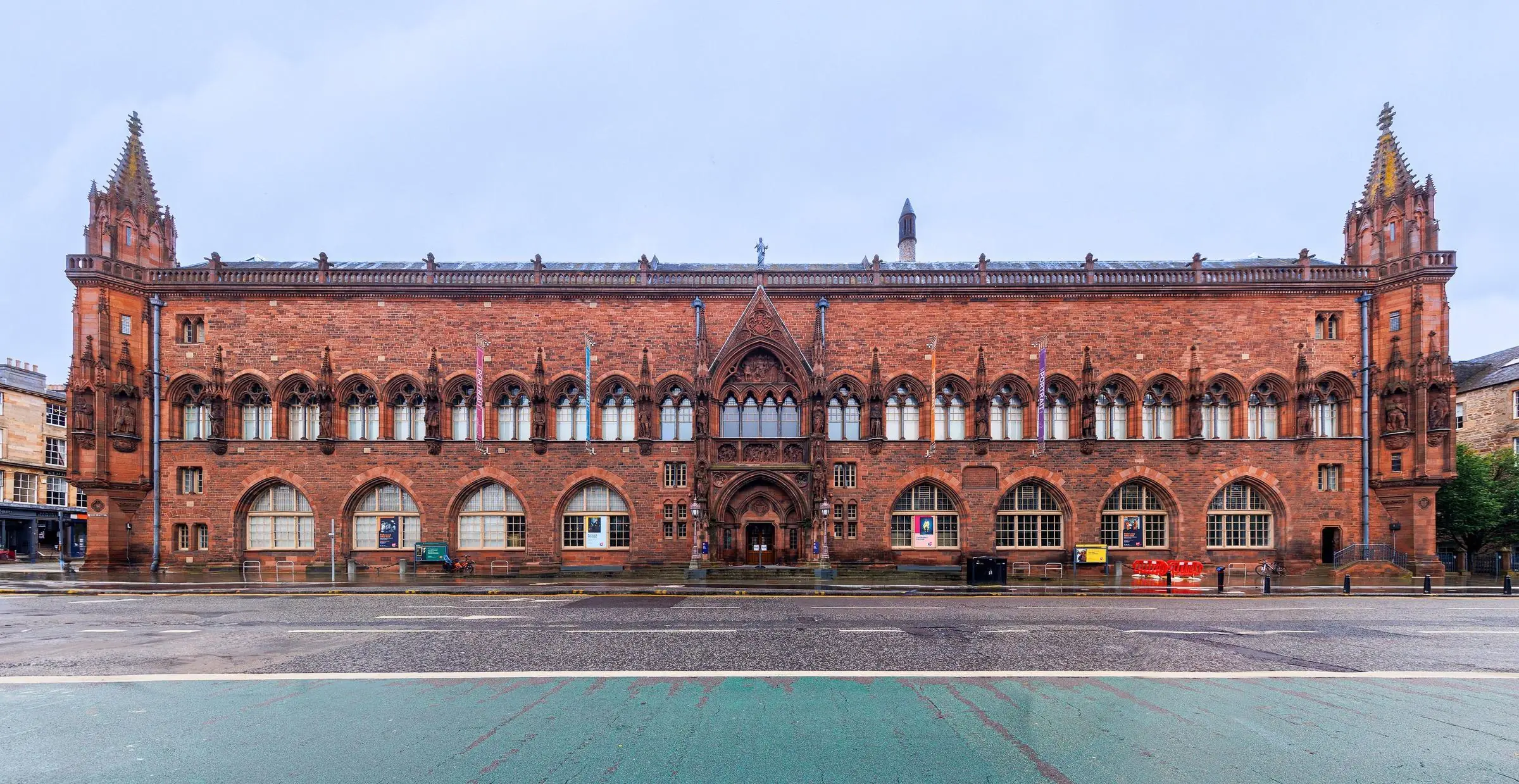
Keep Planning: If you enjoy the Scottish art here, consider walking 10 minutes to Queen Street to visit the Scottish National Portrait Gallery. It is also free, housed in a stunning red sandstone neo-gothic palace, and focuses heavily on the people who shaped Scotland’s history.
Where to Stay Nearby
Staying near The Mound puts you in the dead center of Edinburgh. You are equidistant from the medieval architecture of the Old Town and the Georgian grid of the New Town. Use the map below to find hotels and apartments within walking distance of the gallery.
Frequently Asked Questions
Is the Scottish National Gallery really free?
Yes, entry to the permanent collection is completely free, and you do not need to book a ticket in advance. There are donation boxes throughout the building if you wish to contribute. Occasionally, temporary special exhibitions in the lower RSA building require a paid ticket.
How much time should I spend at the National Gallery?
Most visitors spend between 1.5 and 2 hours here. If you are an art history enthusiast, you could easily spend 3 to 4 hours reading the detailed placards and exploring the upper levels. If you are in a rush, you can see the main highlights in about 45 minutes.
Can I take photos inside the gallery?
Yes, photography for personal, non-commercial use is allowed in the permanent galleries. However, you must turn off your flash, and tripods or selfie sticks are strictly prohibited. Some temporary exhibitions may have different photography rules, which will be clearly signposted.
What is the difference between the National Gallery and the National Portrait Gallery?
The National Gallery (on The Mound) focuses on fine art—landscapes, impressionism, religious works, and general portraiture by European and Scottish masters. The Scottish National Portrait Gallery (on Queen Street) focuses specifically on portraits of Scottish historical figures, from Mary Queen of Scots to modern celebrities, prioritizing the subject over the artist.
Is there a dress code?
No, there is no dress code. Edinburgh is a walking city with unpredictable weather, so casual, comfortable clothing and waterproof layers are perfectly acceptable.
Are dogs allowed in the gallery?
Only registered assistance dogs (such as guide dogs or hearing dogs) are permitted inside the gallery buildings. Pet dogs are not allowed.